
Google, Growth and the Next 65 Years: Putnam County Looks Toward a New Economic Era
At its 65th anniversary dinner, the Putnam County Development Authority celebrated decades of partnership while looking ahead to a project that could reshape the county's tax base, workforce and economic future.
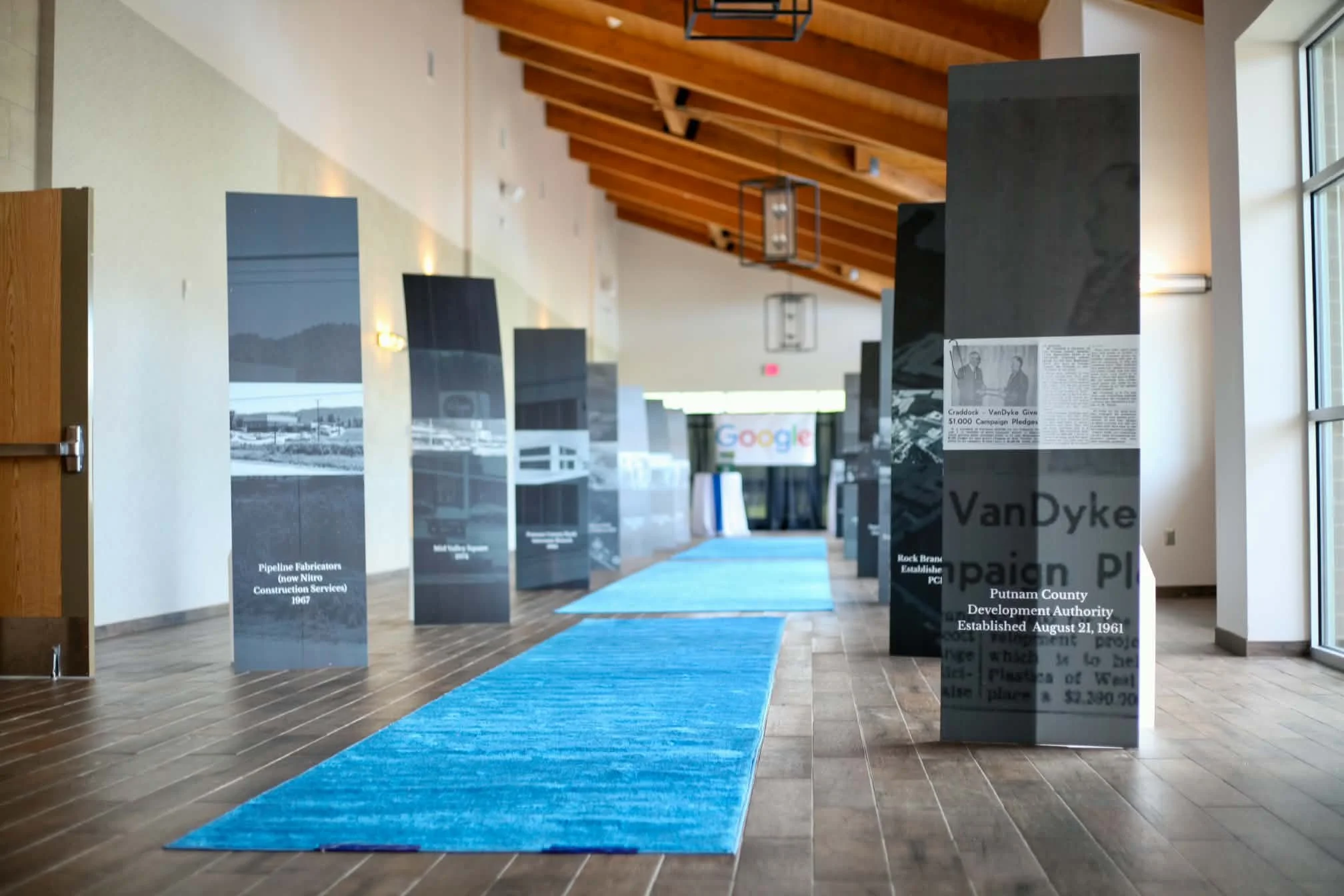
Photo by Ashley Arthur
HURRICANE, W.Va. — The Putnam County Development Authority celebrated 65 years of economic development Thursday evening, but much of the conversation was about what Putnam County could look like decades from now.
Under the theme “Built to Last. Ready to Lead.” and “Powering Partnerships for 65 Years,” PCDA's anniversary dinner at Valley Park brought together business and community leaders to recognize an organization that has been working to grow the county since 1961.
But with Google moving forward on plans for a major data center campus near Buffalo, PCDA Executive Director Morganne Tenney framed the evening around a larger question: How can today's growth create opportunities that last for the next generation?
For Tenney, that means expanding the local tax base, strengthening the resources available to schools and public services and creating jobs that will matter not only in 2026, but in 2039 and beyond.
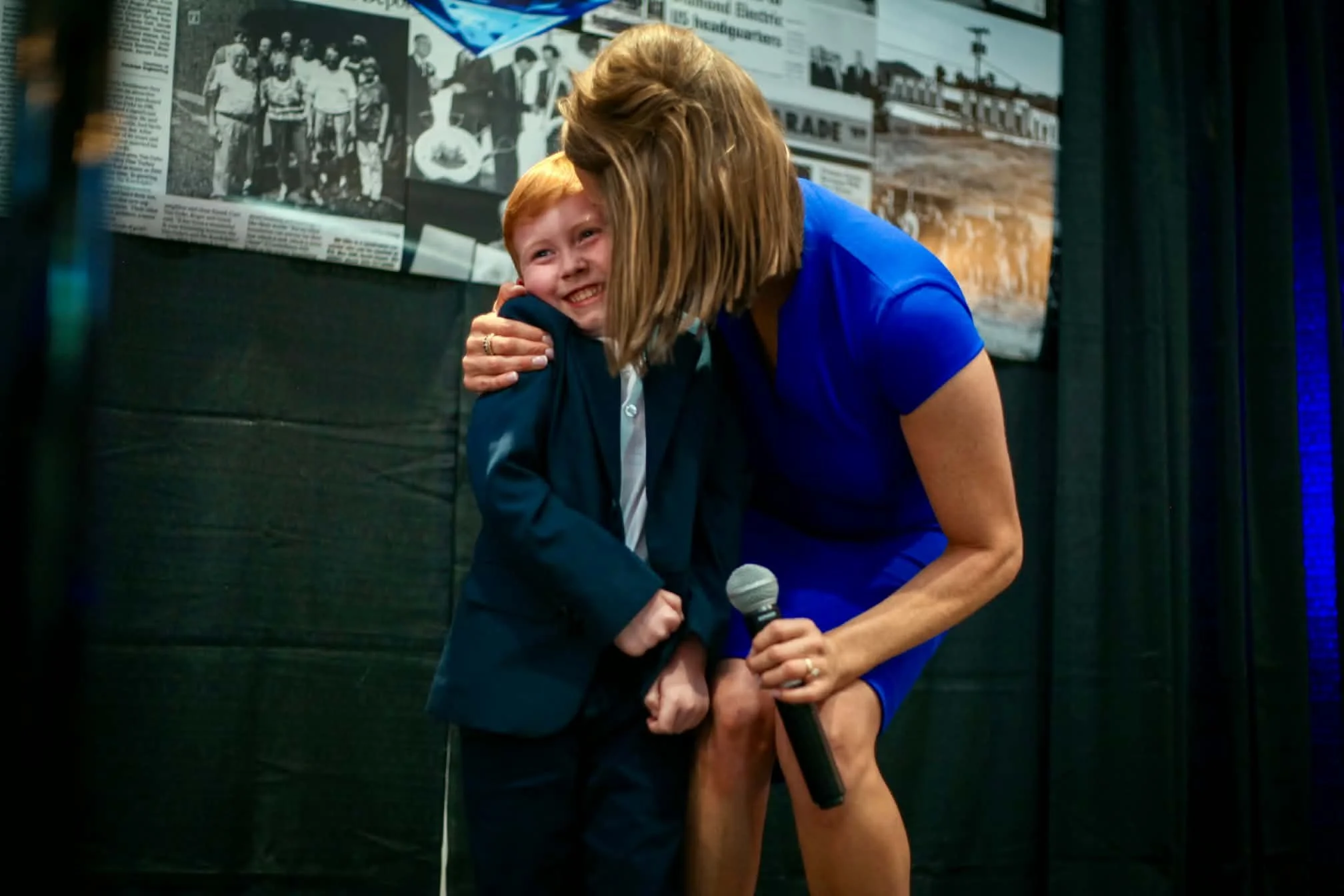
Photo by Ashley Arthur
That long-term view is also personal. Her preschool-aged son was among those in attendance Thursday night, and 2039 is roughly when he will graduate from high school. She hopes the work underway today will help ensure that, when that day comes, he and other young West Virginians have the opportunity to stay — to find good jobs, build careers and make their lives in a thriving Putnam County.
The opportunity, she told attendees, stretches from construction and the skilled trades to highly specialized technical and professional careers — jobs that could allow young people to build careers without having to leave Putnam County or West Virginia.
That message has become increasingly relevant as Putnam County experiences rapid residential and commercial growth. PCDA itself describes its economic development mission around job creation and retention, increasing the tax base and improving quality of life, while the authority has also been working on housing, workforce development and industrial redevelopment to accommodate continued growth.
A West Virginia connection to a global company
The evening’s Google keynote also came with a distinctly West Virginia connection.
Brian George, Google’s senior lead for U.S. energy markets, is a West Virginia native and graduate of West Virginia Wesleyan College — the same school attended by Tenney. His career has taken him into some of the country’s most complex energy and infrastructure issues, but on Thursday night, George repeatedly brought the conversation back home.
“I have deep respect for the people that make up this county and state, where we are proud to call home,” George said. “I know that the trust we have to earn and build and keep is not given. I don’t take that for granted.”
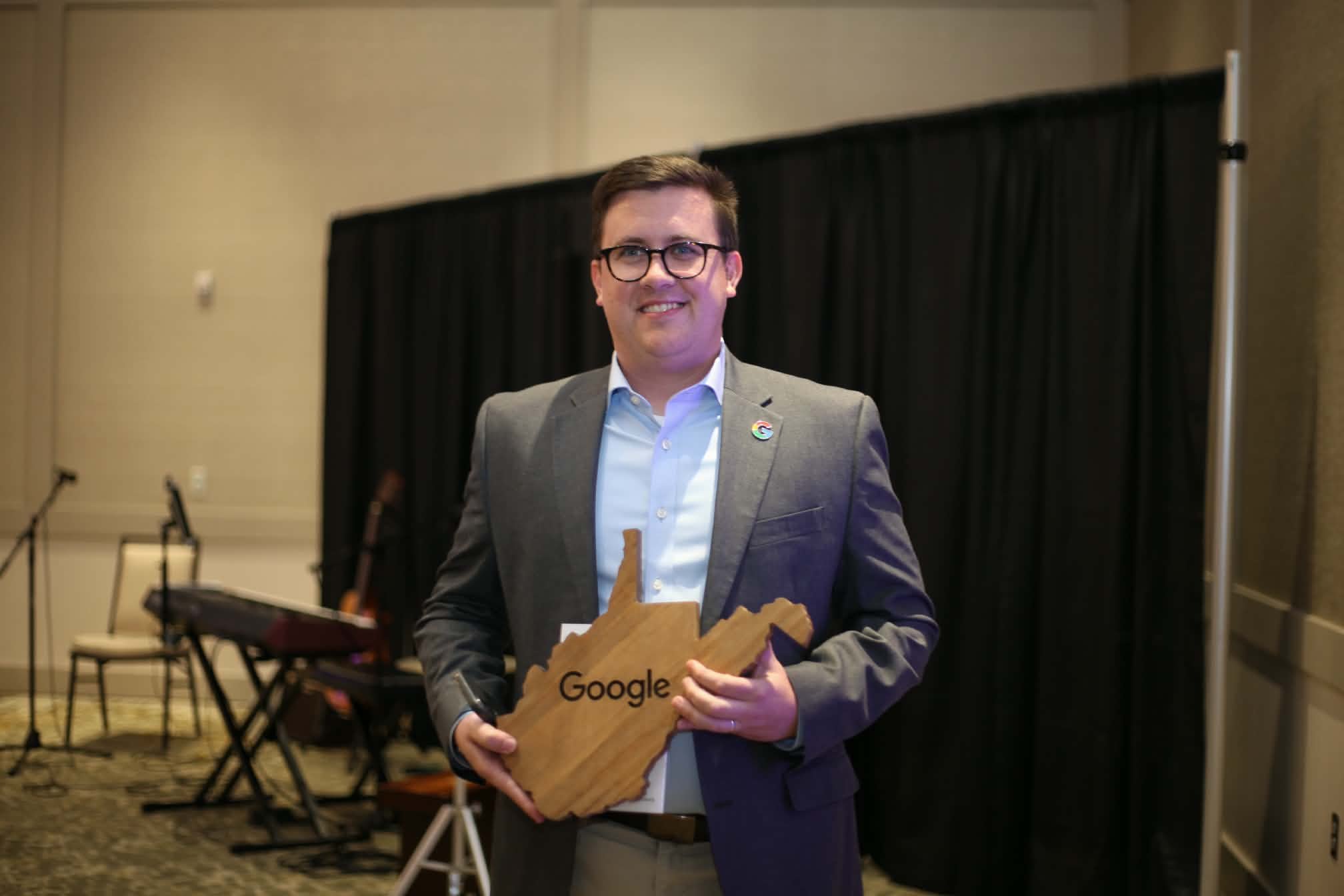
Brian George, Sr. Lead, U.S. Energy Markets | Google
Photo by Ashley Arthur
That question of trust has surrounded the proposed Buffalo development since it became public earlier this year. A project of its size naturally brings questions about power, water, infrastructure, jobs and what a major technology development will mean for the surrounding community.
George did not dismiss those concerns. Instead, he said engaging with residents and local leaders is fundamental to how Google intends to approach the project.
“It’s really a core tenet of what we do that we show up in the community,” George said. “This doesn’t work without the community.”
He acknowledged that people have “lots of questions, concerns and fears,” but said Google intends to be present for those conversations.
“What I can tell you is that we are here to have those conversations,” George said. “Real people work at Google, and we need to do this partnership and be a member of your community.”
For Tenney, that willingness to engage has stood out since the beginning.
According to her presentation, Google closed on the Putnam County property March 26. Within roughly 24 hours, company representatives were sitting down with local officials for an extended meeting that lasted much of the day. Gov. Patrick Morrisey publicly announced the project the following day.
Tenney said she has been impressed by Google’s willingness to listen, answer questions and address concerns as the project moves forward.
For George, the commitment is also personal.
“As a West Virginian, I’m here to tell you that we are committed to doing this the right way,” he said. “We are here to be a partner to you and this community.”
More than a construction project
Publicly reported plans envision a campus on roughly 1,700 acres near Buffalo. Google's project website says the campus remains under development, while reporting based on project information describes plans for as many as eight data center buildings.
What the project could ultimately mean financially for Putnam County is significant.
A September analysis released by the West Virginia State Treasurer's Office modeled Google's Putnam County project as an estimated $7 billion investment. Under the assumptions used in that analysis, the project could generate approximately $8.3 million annually for the Putnam County Commission and $17.4 million annually for Putnam County schools if the project is fully realized. Those are estimates rather than guaranteed revenues and depend on the development moving forward as modeled.
Those numbers help explain why Tenney repeatedly returned to the tax base during Thursday's presentation.
Economic development, in that context, isn't simply about adding a recognizable company to a map. A larger tax base can give communities greater capacity to fund schools, public safety, infrastructure and other local priorities.
The workforce effect could stretch even further.
Google says similar data center developments typically support more than 1,000 construction jobs over time and hundreds of permanent positions, including specialized technical roles. The company also says that, nationally, each direct Google data center job supports about nine additional jobs in the surrounding economy. Project-specific employment totals for Buffalo have not yet been announced.
That distinction is important. The permanent workforce inside a data center is only one part of the economic-development equation.
Electricians, construction workers, HVAC technicians, equipment suppliers, security providers, landscapers, maintenance contractors and other businesses can all be part of the supply chain surrounding a major campus.
For PCDA, that connects directly to a broader effort already underway to expose Putnam County students to careers available close to home. The authority has promoted local pathways in fields including industrial maintenance, machining, surveying, health care and technology with a stated goal of helping more young people understand that they can build careers in West Virginia.
Questions — and an effort to answer them
The proposed development has also generated legitimate questions from residents about power demand, water, environmental impacts and the effect of a project of this scale on the Buffalo area. Community meetings organized after the March announcement reflected some of those concerns.
Google has responded in part by creating a Buffalo-specific project website detailing its approach to energy, water, infrastructure and workforce development.
The company says it intends to pay for the electricity its data centers consume and for infrastructure investments directly required by its growth. Google also says its cooling decisions take local water conditions into account and that it has a companywide goal of replenishing, on average, 120% of the freshwater consumed by its data centers and offices by 2030.
PCDA has pointed to that communication as an important part of the relationship.
Earlier this summer, Google launched a community portal for residents to submit questions and for potential local suppliers to express interest. The company also invited local officials to tour a comparable data center in Ohio, according to PCDA.
And the company's presence has already begun showing up in Buffalo in smaller ways.
An initial round of Google-supported community investments announced this summer included projects at Buffalo High School, Buffalo Senior Center, Buffalo Volunteer Fire Department, Buffalo Elementary School, George Washington Elementary School and George Washington Middle School.
Those investments are small compared with the scale of the proposed campus, but for Tenney, they demonstrate the type of relationship PCDA wants economic development to produce.
Sixty-five years — and the next generation
Google may be the largest name in the room today, but Thursday’s dinner placed the project within a much longer Putnam County story.
PCDA was established in 1961. Over the six and a half decades since, the authority has worked alongside local businesses, manufacturers, public officials and community partners as Putnam County has grown.
Today, the organization is simultaneously working on industrial development, housing, workforce initiatives and one of the largest proposed technology investments in West Virginia history.
That makes the anniversary theme — “Built to Last. Ready to Lead.” — especially fitting.
Being built to last is about more than attracting a company or announcing an investment. It means ensuring growth creates opportunities that remain long after construction crews leave.
For Tenney, that means thinking about jobs not only in 2026, but well into the futre. It means strengthening the local tax base, supporting schools and public services and creating career paths that allow West Virginians to build their lives here.
And for Google, George said, it means becoming more than a company with property in Putnam County.
“We are here to be a partner to you and this community,” he said.
Sixty-five years after PCDA began its work, that may be the clearest measure of what comes next for Putnam County: not simply how much investment arrives, but whether that investment helps build a stronger community — and gives the next generation of West Virginians more reasons to call it home.